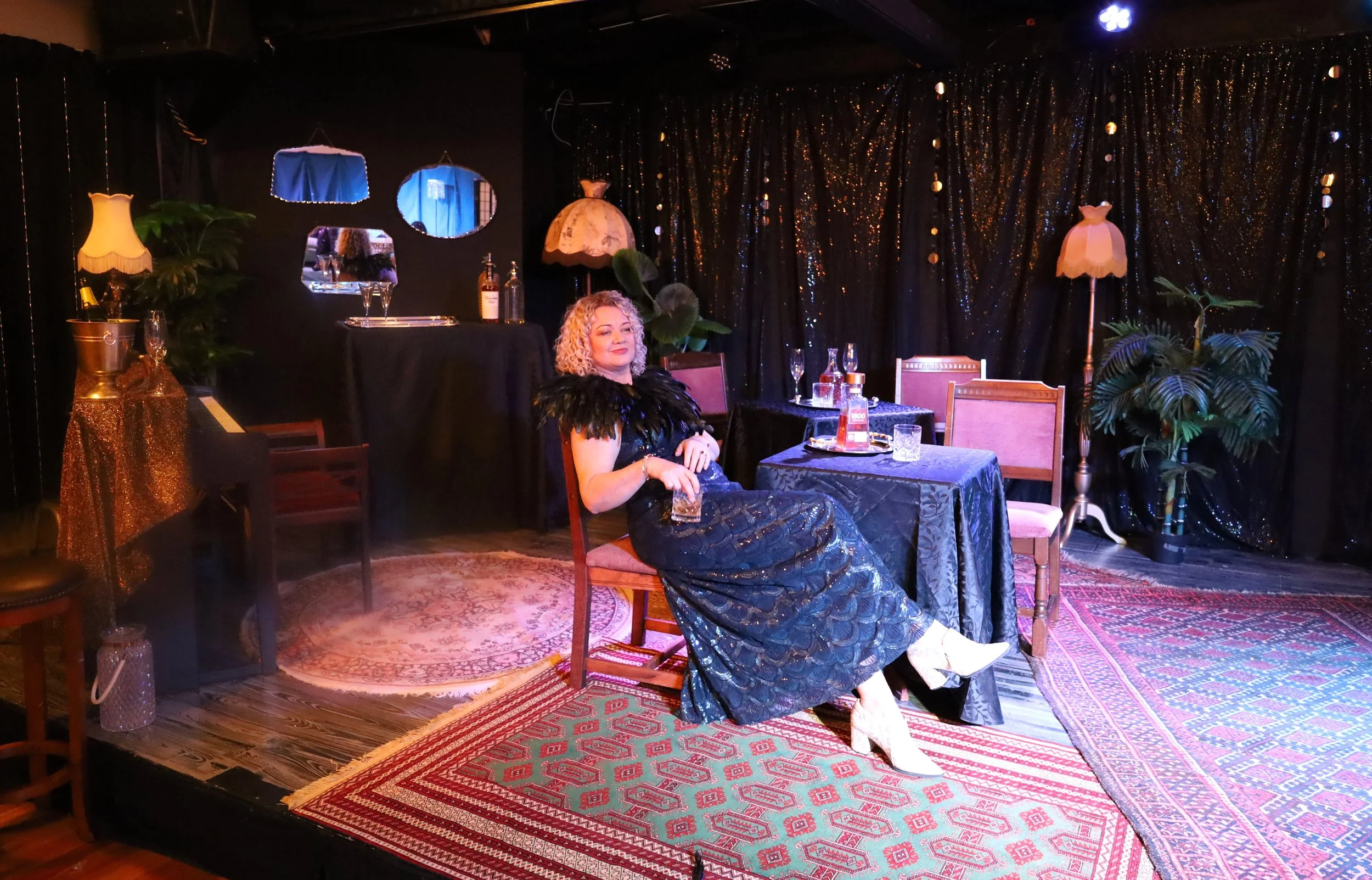
Pictured: Charlotte Kerrigan, director of Blues Bar
Before there were sequins, sold-out shows and audiences getting in early for a second season, there was a playlist of tunes.
Charlotte Kerrigan had come out of an intense musical theatre production and wanted to find her way back to the simple pleasure of making music with other people. Some favourite songs. A room full of people who wanted to be there. Something that felt good.
“It had been such a busy time and I thought, I just need to do something that's really chill.”
That idea became the Blues Bar, a cabaret-style production at Coasters Musical Theatre that brought together a six-piece band, 18 singers and a generous helping of blues and soul. Its first season sold out. Now, with a second instalment selling out weeks before opening, Charlotte and her collaborators have created something local audiences are clearly keen to be part of.
Behind that success is months of musical work, a theatre full of willing hands, and a director who understands how much can happen when people are given a chance. We chatted to Charlotte to learn more about her ‘secret sauce’.
Finding the sound
The original playlist got up to around 150 songs. Otis Redding, Wilson Pickett, Aretha Franklin and Sam Cooke were among the voices that helped shape it: music with feeling, character and plenty of room for singers to make themselves heard.
Charlotte whittled it down to 22 songs, enough for a show that would leave audiences satisfied without keeping them in their seats all night. Then she began building the band.
Some players were experienced, others had never played in a band before. That mix was part of the intention.
“We're talking about people who like playing music,” she says. “They’re fully capable but maybe they haven’t played in a live performance setting before.”
Charlotte wanted to give musicians somewhere to develop, and singers the opportunity to perform with a live band; an experience that even confident musical theatre performers don’t necessarily have when productions use backing tracks.
The band rehearsed for three months before the singers came on board, working through a few songs at a time until the repertoire was ready.
Charlotte had imagined taking on 10 to 12 vocalists. After auditions, she accepted 18.
Making space for those voices meant rethinking how the songs were shared. Each singer would have a solo, then support other performers on backing vocals. Rather than stepping forward for their own number and disappearing, they became part of one another’s performances.
“So we had an awesome wall of sound, and everyone playing their part.”
Building the harmonies together
Much of Blues Bar takes shape in the rehearsal room.
Charlotte creates vocal harmonies by ear, teaching parts that singers record on their phones and practise at home. Songs are workshopped together, with backing vocals developed to suit the arrangement, even where the original recording offers none.
It’s a process that asks people to listen closely, learn their part and understand how it fits with everyone else’s. A soloist might carry the story, but the voices around them give it colour, weight and momentum.
For the second show, Charlotte has raised the musical challenge. Returning performers auditioned again, alongside new singers, with songs including classics such as Respect, Natural Woman and Black Velvet among the options.
The band is back, the vocal mix has changed, and there are more male voices in the harmonies. The pleasure, as Charlotte describes it, is in hearing what this particular group can do together.
Keeping it close
With around 50 seats in the theatre for this production, Blues Bar gives audiences a close encounter with the performers.
There are sequins, feathers and boas, with Coasters’ wardrobe helping everyone dress for the occasion. There’s a live band and a cast whose friends and families are eager to see them shine. For some performers, this is the opportunity they’ve been talking about and working towards for months.
The first season’s success brought encouragement to think bigger. But Charlotte knew that the room itself was part of what people had enjoyed.
“It is intimate theatre. And when it’s electric, you feel it up close.”
That closeness gives the show its character: a small room, a big sound, and familiar faces having their moment just a few metres away. A season of performances also gives the cast time to settle in, enjoy themselves and keep discovering things in the music, rather than putting months of work into a single night.
“We have 8 shows and nobody gets sick of it,” she says. “You know, at the end, it's so good.”
There are limits, too. The people making the show have families, jobs and other musical commitments. Adding more performances means asking more of everyone involved. “People have lives and they enjoy this, but they've got to do other things.”
Keeping the project enjoyable, Charlotte says, is definitely still part of the plan.
A family affair in more ways than one
For Charlotte, the connections on stage are personal. Her dad plays saxophone in the band, her mum sings, and her friends are involved too.
Other families are sharing the experience, bringing different generations into the rehearsal room and onto the same stage. Younger performers working on their craft join people with years of music-making behind them.
Then there’s the team whose work makes those performances possible.
Charlotte is supported by creative assistants Lucy Cameron and Katie Docherty, who help with music and choreography, and production manager Petra Rasmussen, alongside the production support, sound and lighting people working around them. The choreography has stepped up for the second show, something Charlotte can appreciate from the relative safety of her keyboard.
“I'm behind the keys, thank God!” But she’s quick to share the credit. And that shared responsibility runs right through the show. Every song has someone ready to step in when a singer is away. When Charlotte couldn’t attend one rehearsal, the others carried on without her.
“Well, sadly for my ego, they managed just fine.” She’s joking of course, but there’s real satisfaction in it. The group has grown confident enough to keep the music moving together.
Somewhere to belong
For Charlotte, the purpose of a place like Coasters is clear.
“It's actually about community and connection.”
Coasters provides somewhere to rehearse, learn, share skills and keep coming back. Having a theatre of their own gives that community a home, but keeping it alive takes people willing to do the work.
Charlotte talks warmly about the organisation while recognising the challenge of bringing new people into responsibilities behind the scenes, as well as roles in the spotlight. Like many local arts organisations, its future depends on people finding a reason to stay involved.
A production such as Blues Bar offers a way in. Someone gets their first experience with a live band. Someone grows more confident singing harmonies alongside others. A family spends weeks making something together. An audience member comes to support a friend and leaves wanting to see the next show.
The first season sold out two weeks before opening. For the second, Charlotte says, that happened six weeks out. People remembered, and they booked. That’s a lovely vote of confidence in the music and in the people making it, and that right there sounds like the secret sauce.
Charlotte began with a desire to have a good time playing songs she loved. Along the way, she made room for a whole lot of other people to do the same. “It's just a vibe. Everyone's having a really good time. What’s not to love?”